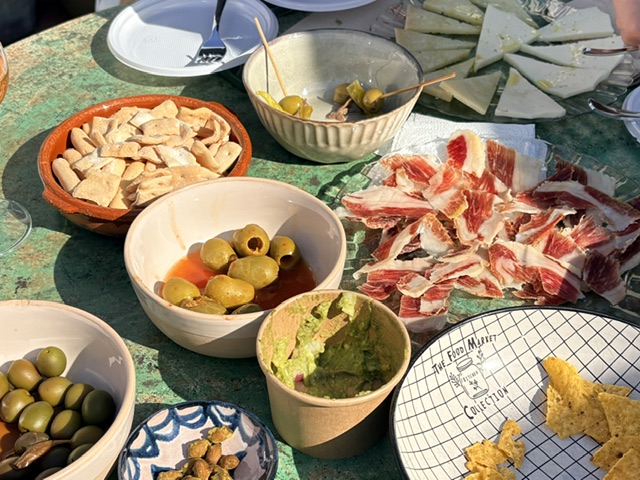
As I walk around Spain and see people drinking, smoking cigarettes, and staying up all night, I wonder why Spaniards tend to outlive Americans. At face value, it makes no sense.
In the U.S. right now there’s a huge (& growing) health and wellness culture — an industry worth almost $2.1 trillion USD. Red light therapy masks, unregulated supplements, pilates classes, and even wellness tourism; we’re seeing health, a fundamental part of daily life, become treated and marketed like a luxury.
Elsewhere in the world, like in Spain, wellness is a simple daily practice, and not something to be bought. When we talk about health and longevity, I think the key difference is the European approach to health vs. the American approach, and what that looks like in practice.
So let’s analyze what it looks like in Spain vs. the U.S., in my personal experience.
Spanish vs. American Grocery Stores
When you walk into a grocery store in Spain, you immediately notice the produce aisles filled with low-priced fruits and vegetables. Grocery stores are tiny, so you’ll also find all the basics – bread, baking goods, dairy, meat, shelf-stable items, and a freezer section.
But what you don’t find is rows and rows of processed foods and protein-everything snacks. There’s simply no space for it in a Spanish grocery store – and the Spanish diet reflects that.
Compare this to an American grocery store, where in addition to the huge junk food aisle (I know you can picture it), there’s also a “healthy snacks” section that is loaded with processed protein bars, protein chips, low-calorie low-fat snacks, etc.
In the U.S. we tell ourselves that this is the healthiest option, because after all, we do have to hit our lofty protein goals. Plus, not everyone in the U.S. has access to affordable produce, which makes the processed food trap even harder to escape.
I think this is a huge reason why people in Spain are less obese and live longer than Americans. They simply cannot access the same processed foods, and it’s incentivized for them to eat a whole foods, Mediterranean diet. Plain and simple.

American Wellness Culture and Consumerism
We can’t ignore the capitalist economy in the U.S., which fuels the trillion-dollar health and wellness industry.
There are constantly new products you must buy in order to be healthy and stay up-to-date with the latest wellness trends. We’re inundated with ads for supplements, wellness technology, protein snacks, probiotic sodas, you name it.
In 2026, we’re told through marketing that health and wellness comes down to buying the right(and most expensive) things.
The U.S. has created a market around wellness that conflates health with consumption, whereas in Spain, it’s much simpler.
Here, people eat a mostly whole foods diet, walk everywhere, and socialize often. You see families gathering for a nice dinner, and friends going on walks as a way to socialize and catch up.
There’s nothing fancy about daily wellness habits in Spain (at least not for most). There’s nothing you need to buy in order to get healthier. The focus is on the basics — a healthy diet, daily activity, and community. And they’re probably not tracking steps, macros, or sleep either.

How Impactful is Drinking Culture?
The one real shocker to me is how much people in Spain drink. As alcohol consumption reached a record low in the U.S., it’s holding strong in Spain.
In Spain, you’ll see people of all ages and backgrounds having a drink with friends any day of the week. It’s not often that you find them drunk, but you will always see them out with a glass of wine or vermouth.
Despite alcohol being a core aspect of the culture, people are still healthy and living longer than in the U.S. This challenges the American narrative that any amount of drinking undermines your health.
My theory is that drinking in Spain is paired with connection and community. People go out and spend time with friends instead of isolating. I think the community benefit to our health outweighs the negative impacts of alcohol. But I am no doctor!

Walkable Cities & Community:
Recent articles and studies have come out showing the importance of connection for our longevity. If there’s one country that deserves an A+ on this topic, I think it’s Spain.
Connection is built into daily life in Spain. Whenever I walk my dog, I stop at least 3-5 times to chat with a neighbor. Then I continue my walk past the local elementary school, where the parents gather and chat on the sidewalk long after they’ve dropped off their kids. After school on Fridays, I see the parents head to the neighborhood bar together for a drink to end the week together. They then spend hours together over a dinner table — and you’ll never see them scrolling on their phones.
In a walkable city, I think these moments of connection happen more naturally. Cars limit the interactions we can have during the daily humdrum. You pass a neighbor and wave when you go by, but there’s no real moment of connection.
Spain also has accessible parks, plazas, and third spaces that are typically lacking in the U.S. (unless you live in a major city).
I was speaking to a former colleague from New England last week, reflecting on her recent trip to France. We were talking about how in Antibes, a city in the South of France where she used to live, they turned what used to be a parking lot into a beautiful public park. We then talked about how the opposite tends to happen in the U.S. — we dig up parks and green spaces for parking lots and new builds.
Europe prioritizes public spaces and communities in a really special way that we aren’t used to in the U.S.

Have GLP-1s Reached Spain?
Are we going there? If we’re talking about health trends in the U.S., I think we have to.
I personally have no issue with whatever people choose to do with their bodies. But we can’t ignore the GLP-1 trend going on in the U.S., and how it’s framed as a trendy wellness product.
Every friend I have in the U.S. talks about the pressure to go on GLP-1s, because everybody knows someone who is on it. It’s more accessible than ever, and doctors are prescribing it left and right. In a growing number of cases, people who are already thin and healthy are taking it as a way to suppress their appetite and get thinner. This takes the focus away from those who really need it for weight or health issues.
The over-prescription of GLP-1s is starting to trickle into the global landscape, too. While it’s still very uncommon in Spain, I do know at least a few people who have decided to go on them.
I think this trend speaks to the rapid weight loss and roundabout ways Americans approach health, vs. Europeans who are already naturally eating well, active, and naturally thinner as a byproduct of that lifestyle.
I’m not saying anyone should or should take them — there’s also plenty of people who need them. But it is a phenomenon happening uniquely in the U.S., that the rest of the world is watching.
So, what do you think?
My takeaway from this is that health and wellness is huge in the U.S., but in a trendy and consumerist way, while in Spain it’s very simple. Diet, exercise, sleep… and maybe a little bit of fun.
While Spain has its own health challenges (like high smoking rates), their baseline approach to daily life seems to lead to healthier outcomes.
Going back to the basics, the way they do in Spain, is the long-term approach to health and wellness that will never go out of style.
I’m curious to hear your take. What are some things you’ve noticed about American health & wellness culture vs. abroad? Leave a comment or shoot me an email!
Other blogs you may like:
Leave a Reply